Elizabethan England Elizabethan England Mens Fashion
Elizabethan Style for Men

There were distinct fashions during the Elizabethan era for men as well as some restrictions regarding what they wore. Observe out how men'due south habiliment styles were defined, what the mutual garments consisted of, and how they changed during this unique fourth dimension period.
Overview of Elizabethan Fashion
The Elizabethan menstruation covers the reign of Queen Elizabeth I. She ruled England during 1558 to 1603. This period is oft considered a renaissance in England, in both literature, art, and even political expansion. During this time, the Protestant Exploration occurred and besides expansion or exploration abroad. While England flourished during the second half of the sixteenth century, manner remained strict for both men and women. For the men of Elizabethan England there were certain rules of what to wear, how to wear it, and the way one should look around women.
The fashions of the era changed significantly while Queen Elizabeth was in power. While women are most remembered for their dress in this fourth dimension, their clothing often mimicked the wait of men. For case, the ruff (neck frills) was worn by both genders and became more than and more than ornate as the menses progressed.
Underclothes
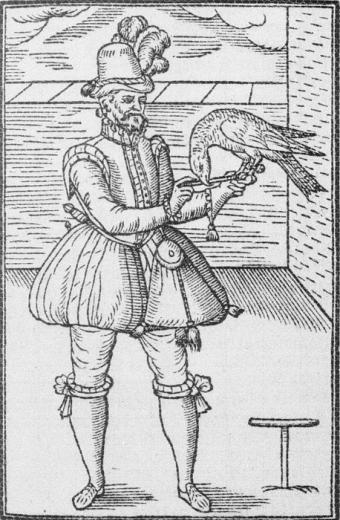
Different today, the amount of clothing a human was required to wear included several layers. The following pieces were all underclothes a human would wear daily.
Stockings or Hose
Worn similarly to modernistic-day tights, stockings or hose were footed and pulled upwardly to around the waist. Hose or stockings did not have a airtight crotch, and then codpieces were invented. Stockings or hose were always worn by a man, whether he was wearing breeches or not.
As codpieces went out of manner, men switched to stockings reaching just over the genu. Knees did not show between the breeches and knees.
Codpiece
Worn over hose, the codpiece would cover the genitalia. This was particularly essential for men wearing shorter doublets and no breeches! It would conceal the opening in a man'due south tights. Codpieces oft were made larger than necessary and used as pockets.
By the year of 1570, codpieces were going out of manner. Prior to this, men would take codpieces. After, push button fly closures became popular on breeches (listed nether overclothes). Men would simply always clothing breeches over their hose. Past the end of Elizabeth's reign, the codpiece essentially disappeared.
Shirt
During this fourth dimension period, shirts were fabricated of simple rectangles and, of course, manus-sewn. In general a shirt "was fitted closely to the body and artillery, with gussets nether the arms to permit movement," co-ordinate to St. George North, an Elizabethan England Acting Social club. In the lower class, shirts were fabricated of white or naturally colored linen. In the heart class, shirts were made of fine white linen and worn with a starched ruff. Even centre class men did not take dyed shirts, although they may have black embroidery on their shirts.
Overclothes
These are the pieces of clothing a human would wear over his underclothes.
Doublets
The doublet was a fitted jacket worn over a shirt past men in the Elizabethan times. It typically was boned, padded, and included buttons down the front end. The styles included varied amounts of padding, restricting boning, or buttons on different sides of the jacket. The shoulders were emphasized with padding. Likewise, doublets were designed to give a man the impression of a pocket-size waist (to make the waist look fifty-fifty smaller, they sometimes wore girdles).
Buttons were fabricated from woods all the way to expensive gems. As a affair of modesty, a man should always article of clothing a doublet and shirt at all times.
Trousers/Breeches

Breeches worn by a man were to be worn around the natural waist (no matter his class). If wearing a doublet, the trousers would be suspended from the doublet by tying holes on a band inside the doublet. The nearly commonly worn options were breeches worn at the knee, just below the knee, or mid-calf. These are not underwear, these are capri style pants.
Sometimes, men wore breeches made of finer wools than the lower classes and would besides sport finer colors. A human being in the heart class might clothing pants pleated at the waist and gathered.
Expensive breeches were fabricated of silk, stain, velvet, leather, and even fragile silks. Flair was added to breeches with vertical slashes down the leg and pops of color exposed or strips of fabric in lining colors.
Ruffs
These are the frill at the neck of the shirt, gathered at the neck ring. Ruffs were worn by both males and females. Typically men and women of all ages, and from every class, had ruffs. These typically did not have embroidery and covered the neck at minimum. Ruffs could too be added to the wrists as well. Sometimes a ruff was attached to a shirt but not always.
Hats
Information technology was standard for men to wear hats in Elizabethan England when outdoors. Flat caps, woven straw hats, shaped felt hats, knit caps, and biggins are all adequate. A lower class man wore flat caps, a shaped wool alpine hat, and even a straw hat. These styles reflected a man's merchandise, that a lid was necessary for their outdoor work. Middle class and upper class men wore flat caps, Italian bonnets, or blocked felt alpine hats. Middle class men would decorate hats with a few short feathers.
Outer Garments

Before leaving their homes or going to piece of work, Elizabethan men couldn't go anywhere without their coats and shoes.
Jerkins
This a sleeveless doublet or jacket worn over a regular doublet. Depending on the class of its wearer, you'd come across wool or leather jerkins. Jerkins could be styled with buttons, collars, or even decorative slashes.
Cloaks, Capes, and Coats
Coats were often loose in way but like they are worn today. Men wore leather because of its ability to withstand pelting and bad weather. Higher grade men added velvet accents on panels to their coats. Just similar now, coats came in tight plumbing equipment, loose, long and curt styles. Whether a man had buttons down the side of his glaze or the front of his coat, the value of information technology was obvious based on material and accents like fur collars or trim.
Shoes
Lower class men wore simple slip-on shoes which were easy to make and get fixed past the local cobbler. Boots for outdoor work fit close to the legs, went up to above the genu, and had small buckles. Typically shoes were made of leather as this lasted for a longer menstruation. The toe tended to be rounded.
Vesture as Status Symbols
Clothing quality and decorations could easily show a human being'south form. Cloth made of certain colors, with gilded or silver, fabricated of satin, or including furs indicated a person could afford such dress. The upper course was the only one with admission to velvets, satin, furs, cottons, taffeta, lace, and other 'rare' fabrics. Rich and vivid colors often cost a considerable amount for dyeing and importation.

In 1574, Queen Elizabeth issued proclamations near clothing allowed according to social rank. The rules were comprehensive and very specific. Some examples of data released in the queen's proclamations include:
- The eldest son of a knight was allowed to clothing velvet doublets and hose, younger brothers could not.
- No one below the rank of knight could habiliment silk long stockings or velvet undergarments.
- Gold was only allowed to be worn by barons and others of college ranking.
Violation of these laws carried penalties like fines, loss of belongings, or even loss of title.
Wearable to Reflect Occupation and Personality
Aside from reflecting status symbol, clothing besides reflected occupation. In the proclamations issued by the Queen, clothing also shows occupation. Cut, color, and fit of clothing could hands reverberate a person's occupation or station in life. While at that place were certain pieces of clothing required for trades, similar aprons or work belts, generally a human in Elizabethan times wore multiple layers of overclothes and underclothes.
© 2022 LoveToKnow Media. All rights reserved.
0 Response to "Elizabethan England Elizabethan England Mens Fashion"
Post a Comment